
CIMAISE
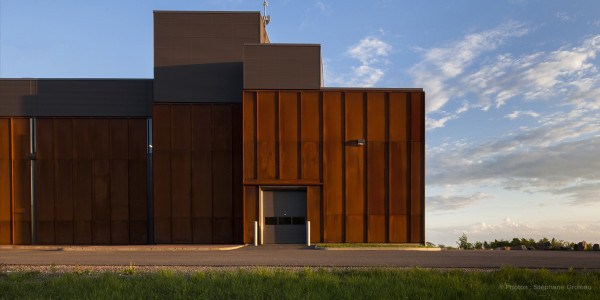
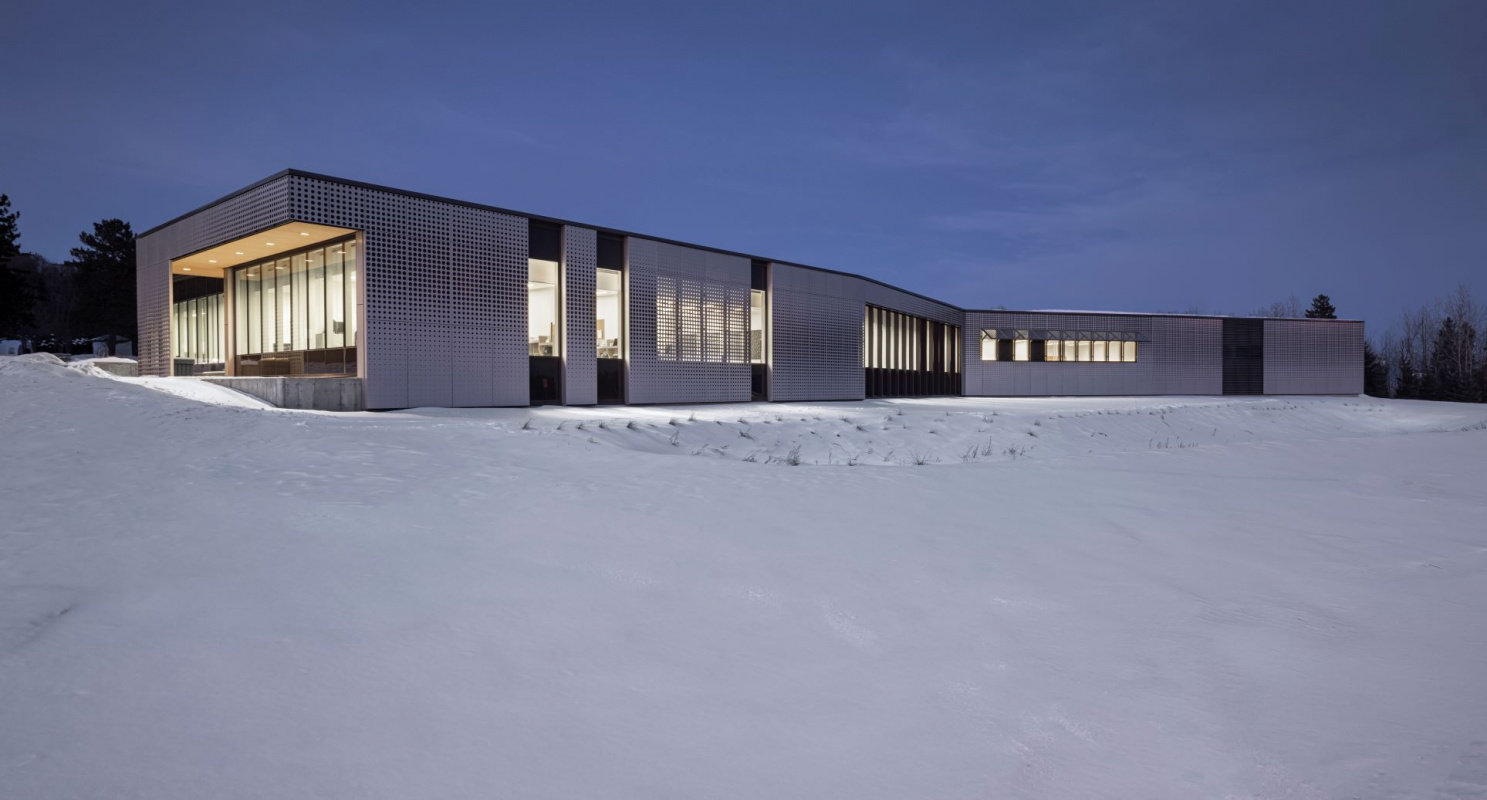
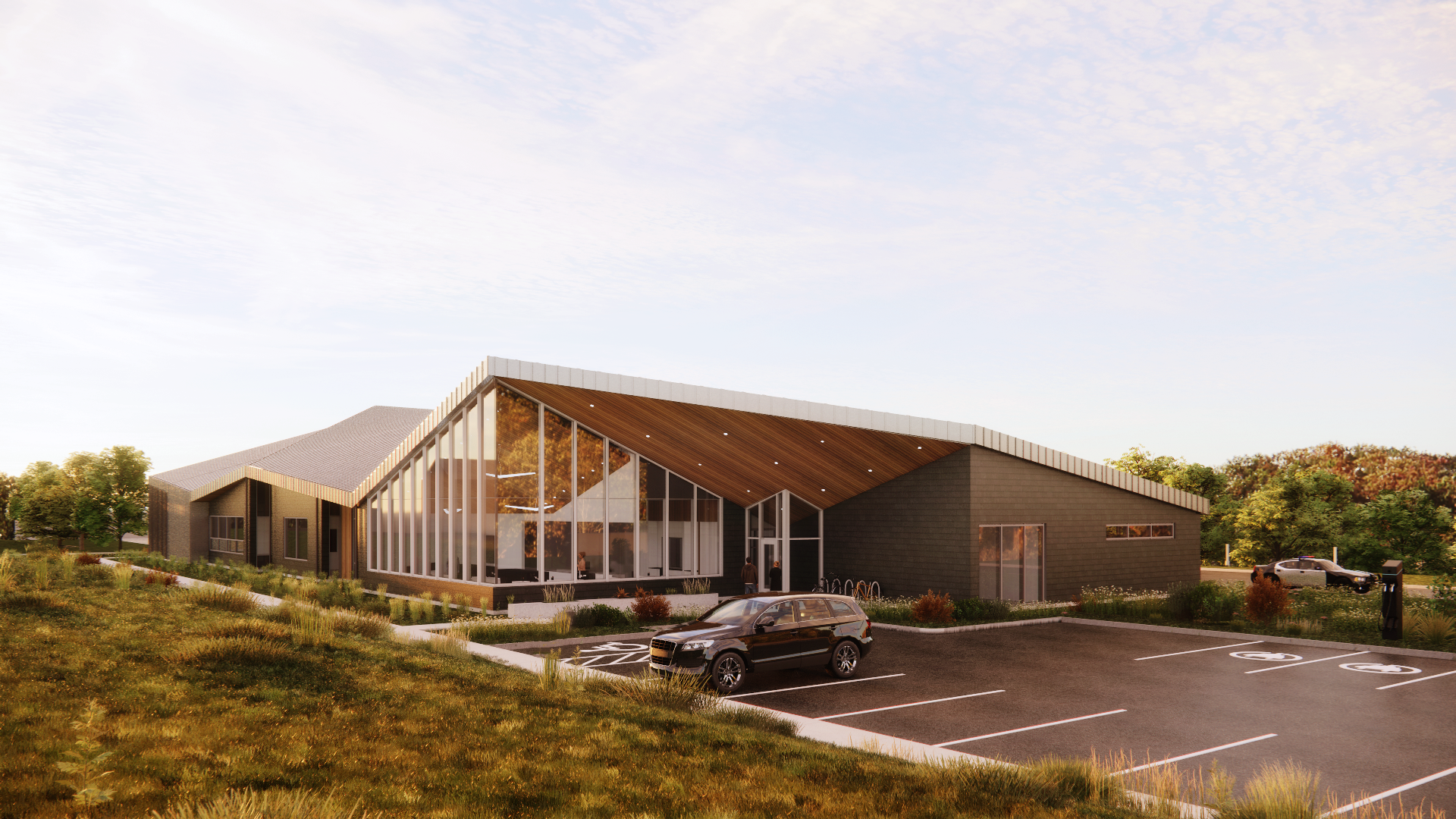
Le nouveau Poste de la Sûreté du Québec à Waterloo, conçu en collaboration avec CIMAISE, allie harmonieusement esthétisme, fonctionnalité et durabilité, tout en soulignant les multiples bénéfices de l’utilisation du bois dans une architecture contemporaine.
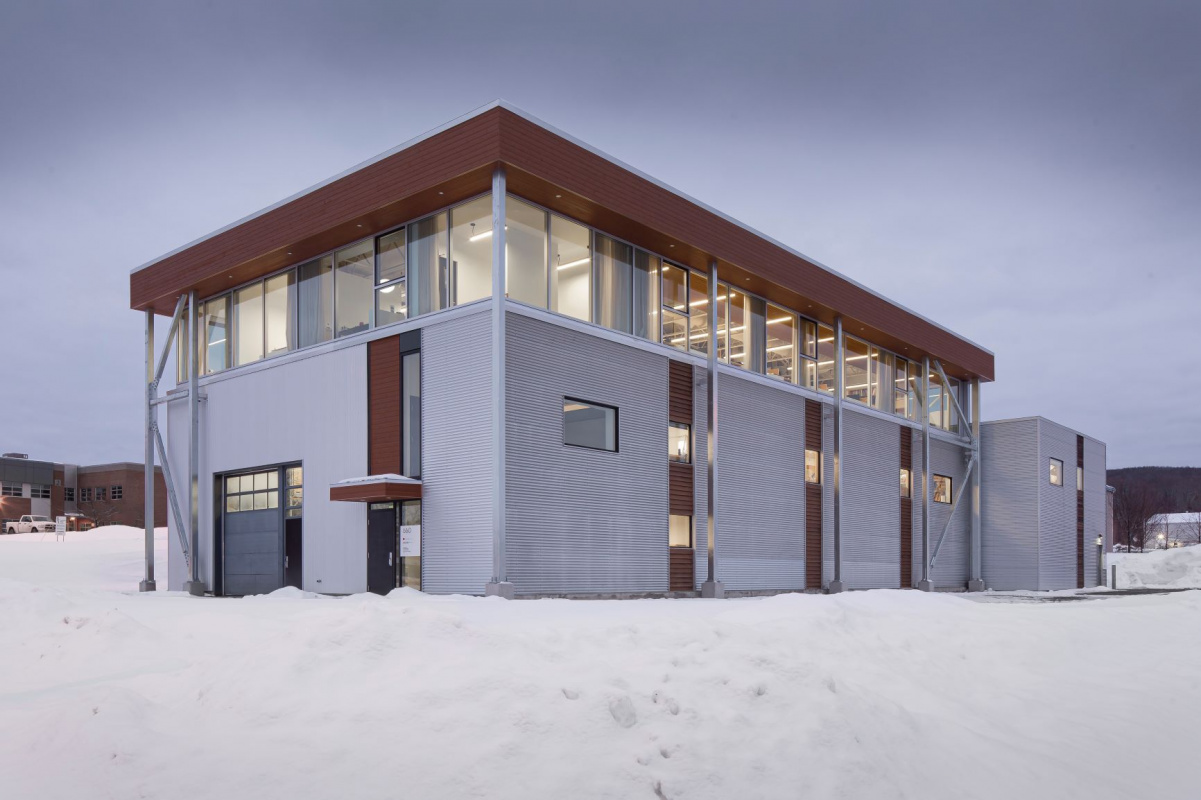
Dès les premières esquisses, l’équipe a réfléchi le bâtiment comme un composant organique de son site, visant une intégration harmonieuse à son environnement. La volumétrie expressive du bâtiment s’inspire des collines avoisinantes et l’emploi judicieux de matériaux naturels tels que l’ardoise et le bois vient renforcer cette intégration.
Pour réaliser la forme du bâtiment, une structure mixte a été privilégiée. Les colonnes, les poutres principales, et les contreventements en acier soutiennent une structure de toit en ossature légère en bois qui confère la flexibilité nécessaire à la concrétisation de cette volumétrie atypique.
La présence du bois a également été maximisée pour créer des espaces chaleureux et accueillants. Le remarquable soffite à l’entrée principale ou encore le plafond des espaces publics ne sont que quelques exemples d’utilisations astucieuses du bois, procurant non seulement une apparence esthétique agréable, mais également de nombreux avantages pour la santé et le bien-être des occupants.
Outre pour ses avantages esthétiques et économiques, le recours au bois a également permis de concevoir un bâtiment à performances environnementales supérieures puisqu’il limite ses émissions de gaz à effet de serre en séquestrant le carbone dans ses fibres. Il contribue ainsi à la lutte contre les changements climatiques. De plus, le bâtiment bénéficie d’une enveloppe hyper-performante, de type ‘’perfect wall’’ qui utilise des matériaux isolants de haute qualité combinée à des techniques de construction avancées afin de minimiser les ponts thermiques et de favoriser l’intégralité et la continuité de l’enveloppe du bâtiment. Le tout dans le but d’optimiser l’efficacité énergique du bâtiment grâce à son enveloppe hermétique et bien isolée.
STGM est fier d’avoir contribué à la réalisation d’un bâtiment performant, en adéquation avec son milieu et qui répond aux dernières exigences de la profession de policiers et de policières.